
Green matcha is real matcha. It is made from shade-grown Japanese green tea leaves and contains caffeine, EGCG antioxidants, and L-theanine. Blue matcha is not actually matcha at all. It is powdered butterfly pea flower, which is caffeine-free and has a mild, floral taste.
If you want energy and traditional health benefits, green matcha is the better choice. If you want a caffeine-free drink with a beautiful blue color, blue matcha is the one to reach for.
Most matcha lovers, myself included, end up keeping both on the shelf for different times of day.
A Quick Note Before We Start
I’ve been drinking matcha daily for years, and one of the most common questions I get is whether blue matcha is just a trendier version of green matcha. It is not. These two powders come from completely different plants and do completely different things for your body.
That doesn’t mean one is bad. It just means the comparison is not quite apples to apples, and knowing the difference helps you pick the right one for your morning, your evening, and your goals.
Let me walk you through it.
What Is Green Matcha?
Green matcha is a fine powder made from shade-grown Japanese green tea leaves. The plant is Camellia sinensis, the same plant used for black, white, and oolong tea. What makes matcha different is how the leaves are grown, processed, and consumed.
How it is made. The tea plants are shaded for about three to four weeks before harvest. Shading boosts chlorophyll and L-theanine, which gives matcha its bright green color and smooth flavor. After picking, the leaves are steamed, dried, de-stemmed, and stone-ground into a powder so fine it feels like silk between your fingers.
How you drink it. Unlike regular tea, you don’t steep matcha and throw away the leaves. You whisk the whole powder into hot water and drink the entire leaf. That is why matcha is much more concentrated in antioxidants and caffeine than a steeped cup of green tea.
Where it comes from. Powdered tea drinking started in China during the Song Dynasty and was brought to Japan by the Buddhist monk Eisai in the late 1100s. Over the next few hundred years, Japan developed it into what we now call matcha, and it became the heart of the Japanese tea ceremony, or chanoyu.
What it tastes like. Good green matcha has a rich, savory flavor called umami, with a hint of sweetness and a grassy finish. Lower grades can taste bitter or dusty, so quality matters a lot here.

What is Blue Matcha?
What Is Blue Matcha?
Blue matcha is not made from tea leaves. It is a powder made from dried butterfly pea flowers, a plant called Clitoria ternatea that grows in Southeast Asia.
The name “blue matcha” is mostly a marketing choice. It became popular because the powder is finely ground and whisked into drinks the same way green matcha is, so the name stuck. But botanically and nutritionally, it has nothing in common with real matcha.
How it is made. The butterfly pea flowers are picked, dried, and ground into a soft powder. Some brands blend it with other herbs, so it helps to read the label.
What it tastes like. Blue matcha has a very mild, slightly earthy and floral flavor. It is often described as tasting like a gentle herbal tea. Some people barely taste it at all, which is why it is used more for color than flavor.
Where it comes from. Butterfly pea flowers have been used for centuries in traditional drinks and dishes across Thailand, Malaysia, and Vietnam. The blue color also changes to purple or pink when you add lemon juice, which is why you see it show up in fancy cocktails and layered drinks.
Blue vs Green Matcha: Side by Side
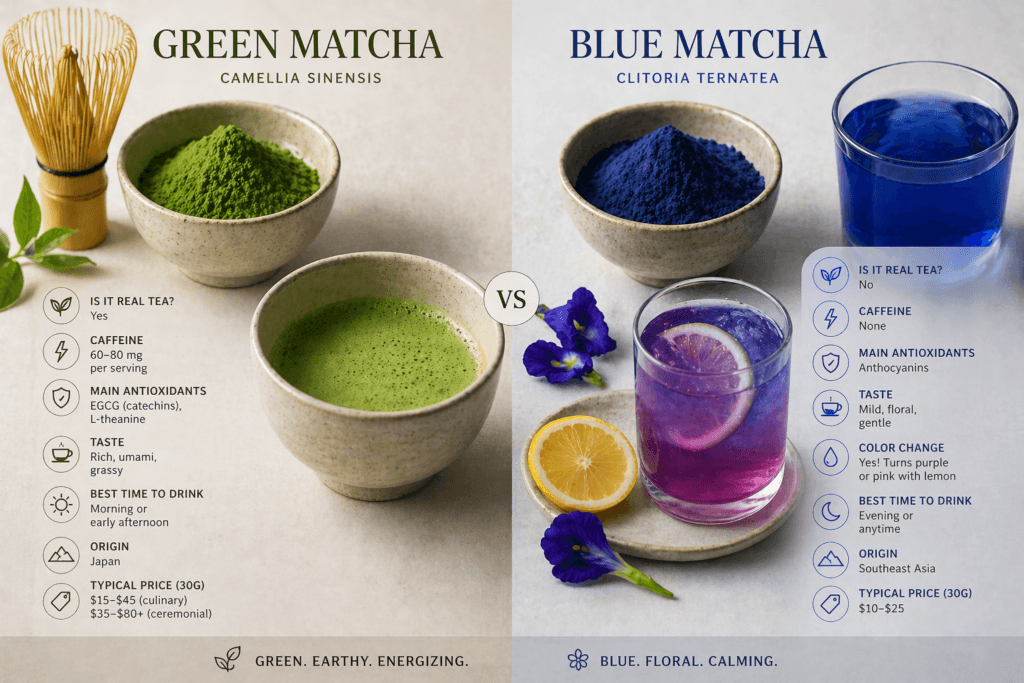
Here is the quick comparison most readers come here for.
| Feature | Green Matcha | Blue Matcha |
|---|---|---|
| Source plant | Camellia sinensis (tea plant) | Clitoria ternatea (butterfly pea flower) |
| Is it real tea? | Yes | No |
| Caffeine | Yes, about 60 to 80 mg per serving | None |
| Main antioxidants | EGCG catechins, L-theanine | Anthocyanins |
| Taste | Rich, umami, grassy | Mild, floral, gentle |
| Color change in lemon | No | Yes, turns purple or pink |
| Best time to drink | Morning or early afternoon | Evening or anytime |
| Origin | Japan | Southeast Asia |
| Typical price per 30g | $15 to $45 (culinary) or $35 to $80+ (ceremonial) | $10 to |
Health Benefits Compared
Both powders have real, research-backed benefits. They just work on the body in different ways.
Green Matcha
Green matcha is one of the most studied functional drinks in the world.
- EGCG antioxidants. Green tea is rich in a catechin called epigallocatechin gallate, or EGCG. According to research published through the National Library of Medicine, EGCG has been studied for its role in supporting heart health, metabolism, and cellular protection.
- L-theanine. This is an amino acid found mostly in shade-grown teas like matcha. It pairs with caffeine to give you that calm, focused energy without the jitters, which is why so many people swap their coffee for matcha.
- Sustained caffeine. A cup of matcha has about half the caffeine of coffee but releases it more slowly, so the boost lasts longer and the crash is gentler.
Blue Matcha
Blue matcha has a much smaller research base, but the studies so far are promising.
- Anthocyanins. These are the same antioxidant pigments found in blueberries and purple cabbage. They have been studied for their anti-inflammatory and antioxidant properties, according to a review in the Journal of Food Science and Technology.
- Caffeine-free. Because it comes from a flower and not a tea leaf, blue matcha has no caffeine at all. That makes it a calm choice for the evening, for pregnancy, or for anyone who wants to cut back.
- Traditional use. Butterfly pea flower has been used for generations in Southeast Asian wellness drinks, often brewed as a relaxing tea.
One thing to keep in mind. Most of the research on butterfly pea flower is early stage, so I would not rely on blue matcha as a serious health supplement the way you might with green matcha. Drink it because it is beautiful, mild, and calming.
Read Next>>The Ultimate Guide to Caffeine in Tea
Taste and How to Use Each One
Green Matcha
Green matcha is bold. It has backbone. You can taste it in any drink or recipe you put it in, which is both a strength and a limit.
I use it for:
- Traditional whisked matcha in a chawan first thing in the morning
- Iced matcha lattes with oat milk in warmer months
- Baking into cookies, loaf cakes, and scones
- Whisking into yogurt bowls or overnight oats
A small scoop (about 1 to 2 grams) is plenty. Use water at around 175°F, not boiling, so you don’t scorch the leaf.
Blue Matcha
Blue matcha is gentle and mostly decorative. The flavor is so soft that you pick it for color and ritual more than for taste.
I use it for:
- Blue lattes with a little honey and vanilla
- Caffeine-free afternoon drinks when I want to slow down
- Natural food coloring in rice, frosting, or lemonade (watch it turn pink with lemon)
- Layered iced drinks that look gorgeous in a glass
You can use the same whisking tools, though a small milk frother works just as well since you are not building the same kind of foam.

Which Is Better for You?
The honest answer is that neither one is better. They just do different jobs.
Choose green matcha if you want:
- A natural caffeine boost with calm focus
- Deep, well-researched health benefits
- A traditional Japanese tea ritual
- A bold flavor you can bake and cook with
Choose blue matcha if you want:
- A caffeine-free drink for evenings or pregnancy
- A visually stunning color in your recipes
- A gentle, floral flavor that won’t overpower other ingredients
- Something fun and photogenic for your coffee bar
In my own kitchen, green matcha is the ritual and blue matcha is the treat. Green matcha grounds my morning. Blue matcha shows up when I’m hosting friends, making something pretty, or winding down after dinner.