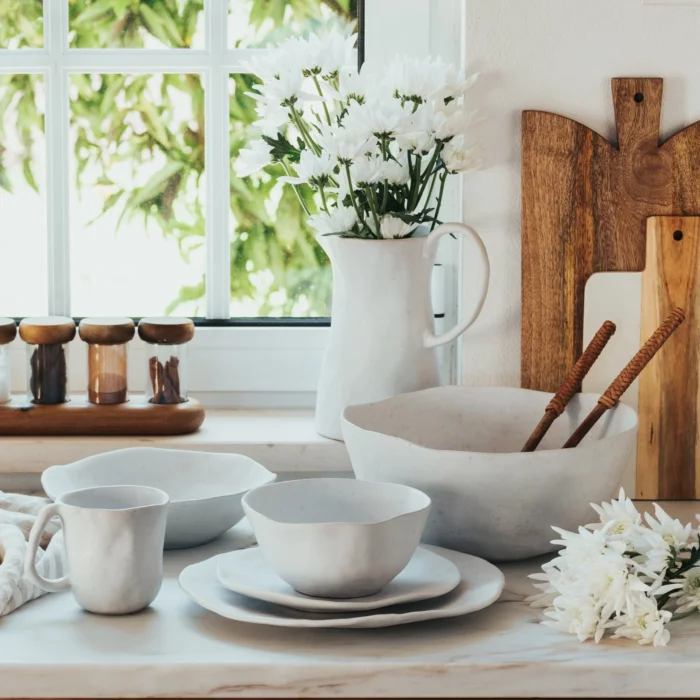
By 2030, the global ceramics market is set to hit $359.4 billion. But let’s bring it closer to home – to your kitchen. Think about your plates, mixing bowls, pie dishes, and casseroles. Ever wondered what they’re made of?
Three types of ceramics dominate our kitchens: Stoneware, Porcelain, and Earthenware. They’re all made from clay hardened in a kiln, but the clay mix and firing temperatures make a big difference in how they perform.
Porcelain isn’t just for fancy tea sets or decorative statues. It’s surprisingly tough for bakeware too. Stoneware, with its rustic charm, is known for being incredibly versatile. And Earthenware? It’s been around since ancient times, still holding its own in modern kitchens.
This article digs into these everyday materials. We’ll explore their unique traits and how they fit into our kitchens and lives. Whether you’re after your grandmother’s elegance or a more laid-back vibe, there’s a ceramic type for you.
I chatted with Monia Rassaa, founder of Ekho, to get some expert insights. Rassaa, a Tunisian product designer and potter with a PhD in ceramics, shared some fascinating facts about these materials.
Ready to discover which ceramic resonates with your style and cooking needs?
stoneware vs earthenware
What is Stoneware?
Stoneware is a type of ceramic pottery made from clay fired at high temperatures, typically between 2150°F and 2330°F (1170°C to 1270°C). This firing process results in a dense, strong, and durable material that’s more water-resistant than earthenware.
Appearance and Texture
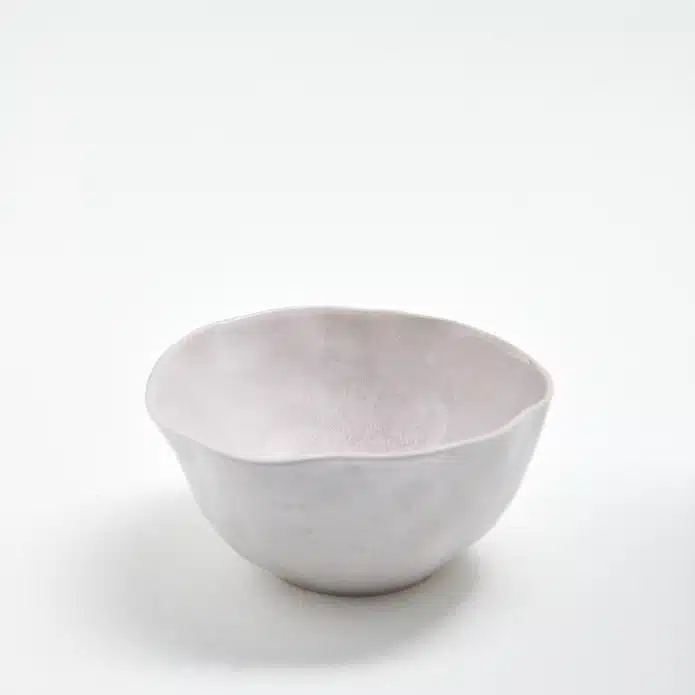
Stoneware comes in earthy tones, ranging from grey to brown, depending on the clay and firing techniques. It often has a slightly coarse texture, giving it a rustic look. This texture contributes to stoneware’s unique properties.
Advantages of Stoneware
- Durability: Stoneware can handle daily wear and tear better than most other ceramics. This durability made it suitable for long-distance trade in ancient times.
- Heat Retention: Stoneware holds heat well. This makes it great for baking – you’ll get nicely browned bottoms, crispy edges, and evenly cooked middles.
- Moisture Absorbency: The slight porousness of stoneware helps keep bread crusty and pie bottoms from getting soggy.
- Affordability: Stoneware is relatively inexpensive. The materials are easy to source, and it doesn’t require the extremely high firing temperatures of porcelain.
Considerations
- Weight: Stoneware is heavier than some other ceramics, which might be a factor if you’re looking for lightweight dinnerware.
- Cleaning: The slightly porous surface can make stoneware a bit trickier to clean. Food particles and bacteria can get trapped in the tiny pores.
- Surface Scratching: The unglazed bottom of stoneware can sometimes scratch other surfaces.
Cultural Significance
In Japan, raku stoneware is used in traditional tea ceremonies. Korean celadon stoneware is known for its delicate green glaze and refined forms. In Western countries, stoneware has been used for both functional and decorative purposes.
Caring for Your Stoneware
Most stoneware is dishwasher safe, but hand washing with warm water and a soft sponge can help it last longer. Avoid sudden temperature changes, as these can cause cracking
Also Read >> Best tips to Buying and Caring for Stoneware
Local Handcrafted Stoneware Brands

Grandmont Street: Vintage-Inspired Match Strike
From Evanston, IL, Julia Finlayson of Grandmont Street presents hand-thrown match strikes, inspired by vintage designs. Available in grey and matte black, each piece is crafted with dark clay and finished in matte white or black glaze. Celebrating the art of match strikes, these pieces bear the unique marks of handcraftsmanship. Pair with ‘Strike Anywhere Matches’ (not included) for a blend of functionality and history.
Porcelain is a remarkable ceramic material, known for its striking white color and smooth, glossy finish. But there’s more to porcelain than meets the eye.
What is Porcelain?
Porcelain is a vitrified ceramic composed of a kaolin clay base, mixed with feldspar and quartz silica. This mixture is fired at extremely high temperatures, typically around 2300°F (1260°C), which is about 200°F higher than stoneware at 2100°F (1150°C). This intense heat causes the silt additives in the clay to meld together, creating a dense, glass-like material.
Composition and Construction
The fine particles in porcelain clay result in a denser, stronger material when fired. This allows makers to create thinner, lighter pieces without compromising strength. The construction process is crucial; high-quality porcelain follows precise recipes, like the 200-year-old French method some manufacturers use.
Advantages of Porcelain
- Durability: Despite its delicate appearance, porcelain is incredibly hard and durable.
- Lightweight Build: Porcelain can be made thinner than stoneware, resulting in lighter, easy-to-handle pieces.
- Smooth Texture: The fine-grained clay creates a smooth, non-stick surface that’s visually appealing and easy to clean.
- Thermal-Shock Resistant: Porcelain distributes heat evenly, allowing it to withstand temperature fluctuations without cracking.
- Versatility: It’s used in everything from fine dinnerware to architectural elements and art pieces.
Considerations when Choosing Porcelain
- Chipping: While extremely hard, porcelain can chip if subjected to sharp impacts.
- Price: The intricate production process often makes porcelain more expensive than other ceramics.
- Quality Variations: Some lower-quality “porcelain” products may use enamel or non-stick coatings to compensate for subpar craftsmanship.
Porcelain in Use
In the kitchen, porcelain bakeware excels. Its even heat distribution makes it perfect for dishes like cornbread or butter-based recipes. The smooth, non-stick surface ensures easy food release and cleanup.
Porcelain’s elegance extends beyond the kitchen. It’s a favorite for fine dining plates, decorative pieces, and even bathroom fixtures. Its translucent quality and ability to be molded into intricate shapes make it a preferred material for artists and designers.
Historical Significance
Originating in China, porcelain has been a symbol of refinement and status for centuries. Its production was once a closely guarded secret, with European craftsmen spending years trying to replicate its unique properties.
Caring for Porcelain
While durable, porcelain benefits from careful handling. Avoid sudden temperature changes and be mindful of its potential to chip when knocked against hard surfaces.

What is Earthenware?
Earthenware is a type of pottery made from clay, fired at low temperatures to create a porous, coarse texture.
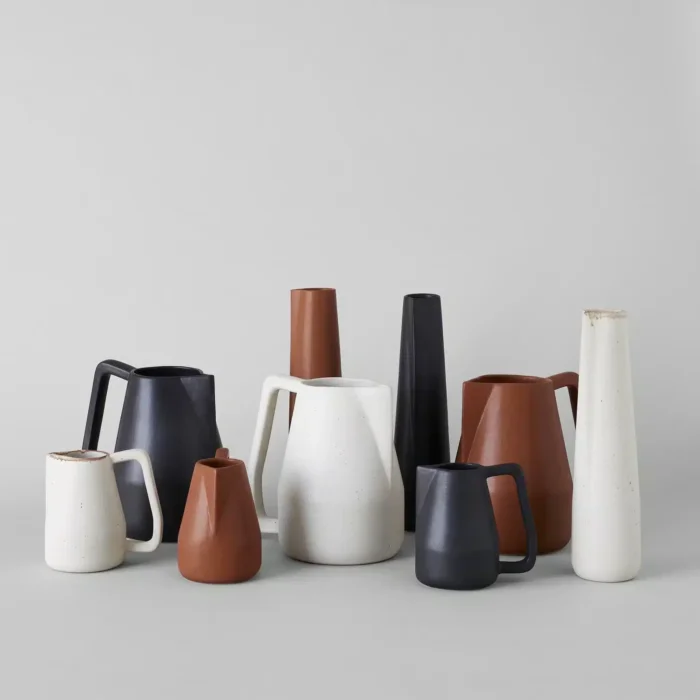
It includes terra cotta, known for its rustic, reddish-brown color from iron in the clay.
Earthenware is less durable and more prone to chipping compared to stoneware or porcelain.
Composition:
often mixed with other natural elements like silica, feldspar, and talc. This blend gives earthenware its distinct properties.
Silica contributes to the hardness and structural integrity, feldspar acts as a flux during firing, and talc can improve the clay’s workability and end-product strength.
Firing Temperature:
The firing temperature for earthenware is relatively low, typically between 1,000°C and 1,200°C.
This lower temperature range is significant as it doesn’t allow the clay particles to vitrify fully, which is the process of turning into a glass-like substance.
As a result, earthenware retains a certain level of porosity and has a more coarse texture compared to higher-fired ceramics.
Characteristics:
Earthenware is easily recognizable by its reddish-brown color, a result of iron oxides present in the clay. Its texture is generally more porous and grainy compared to stoneware or porcelain.
This porosity means that earthenware, unless glazed, is not naturally waterproof. It’s also more prone to chipping and cracking, making it less durable than other types of ceramics.
However, these characteristics also give earthenware a rustic, earthy charm, making it popular for decorative items and certain types of cookware.
Which is Better Stoneware or Earthenware?
Stoneware is better for everyday use because it is more durable, non-porous, and resistant to chipping. It’s easier to clean and can handle the wear and tear of daily life.
Earthenware, on the other hand, is better for special occasions or if you prefer a rustic, handmade look. However, it is less durable, more porous, and requires more careful handling to avoid chips and cracks.
Are Earthenware and Stoneware the Same?
Earthenware and stoneware are not the same. They are distinct types of ceramics with different properties and uses:
- Earthenware: This is made from clay fired at a relatively low temperature, resulting in a porous and coarse texture. It’s known for its reddish-brown color and is generally more fragile and less durable than stoneware or porcelain. Earthenware is often used for decorative items and certain types of cookware, but it needs glazing to become waterproof.
- Stoneware: Stoneware is fired at a higher temperature than earthenware, leading to a denser and more durable product. It’s characterized by a range of colors (from light grey to brown) and a dense, smooth texture with a slight roughness. Stoneware is known for its strength, heat retention properties, and practicality, being dishwasher and microwave safe. It’s commonly used for tableware, kitchenware, and storage containers.
The key differences lie in their composition, firing temperature, and resulting durability and texture. Stoneware is generally more durable and less porous than earthenware.
How about Terra Cotta?
Terra cotta is a form of earthenware which features a distinctive unglazed, reddish-brown finish.
Crafters fire it at lower temperatures, creating its characteristic porous and brittle texture. Often chosen for its earthy, rustic charm, terra cotta is widely used in making plant pots, sculptures, and architectural details.
Small Artisans-Made Brands and products For Terra Cotta
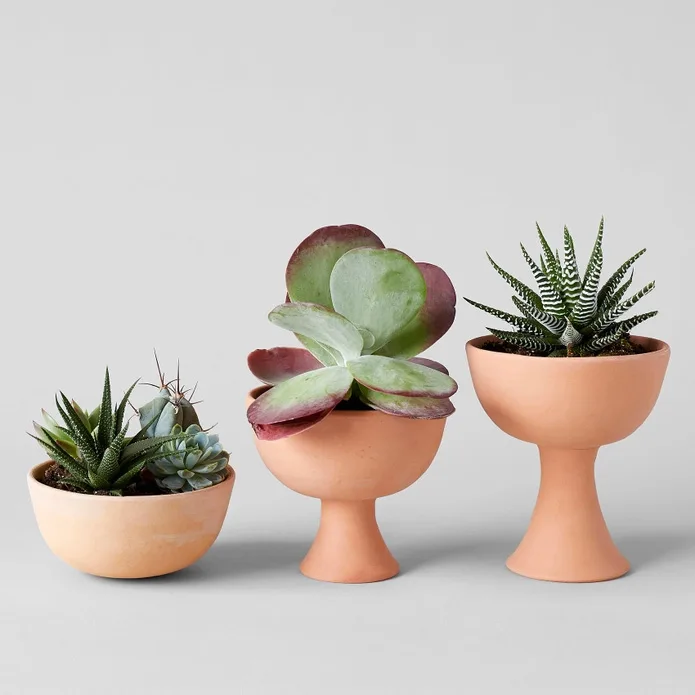
EKHO DESIGN
Crafted by artisans, Ekho Design’s terra cotta planters embody traditional Tunisian pottery’s essence. The clay’s transformation to a terra cotta pink beautifully complements green plants. Perfect for succulents or herbs, these planters, without drainage holes, thrive with a rock-lined base. Founded by Monia Rassaa, Ekho merges cultural heritage with modern design.
Shop our Handmade Ceramics Collection


Stoneware vs. Porcelain vs. Earthenware Performance and Sustainability
When comparing earthenware, stoneware, and porcelain:
- Durability: Stoneware ranks highest, with porcelain close behind, both resistant to wear and chipping. Earthenware is more prone to damage.
- Environmental Impact: Earthenware requires lower firing temperatures, lessening its carbon footprint, while high-fired stoneware and porcelain are more energy-intensive.
- Maintenance and Care: Porcelain and glazed stoneware are easiest to maintain, being dishwasher safe and less stain-prone. Earthenware may require more careful handling.
- Suitability: Stoneware is great for daily use, porcelain for fine dining and art, and earthenware for decorative and some cooking uses.
Stoneware vs. Porcelain vs. Earthenware
| Feature | Stoneware | Porcelain | Earthenware |
|---|---|---|---|
| Durability | High (resistant to wear and chipping) | High (strong and chip-resistant) | Lower (more prone to damage) |
| Environmental Impact | Higher (requires high firing temperatures) | Higher (energy-intensive due to high firing temperatures) | Lower (lower firing temperatures) |
| Maintenance and Care | Easy (dishwasher safe, less stain-prone) | Easy (dishwasher safe, stain-resistant) | Requires care (prone to staining, not always dishwasher safe) |
| Suitability | Ideal for daily use, cooking | Suited for fine dining, artistic works | Best for decorative purposes, some cooking uses |
In conclusion, as emphasized by Dr. Monia Rassaa, it’s crucial to be mindful of the origin, manufacturing processes, and safety of ceramic pieces, especially when using them for food.
She highlights the importance of knowing the region of origin, as some ceramics can contain lead or other harmful chemicals.
This awareness ensures not only the quality and authenticity of your ceramics but also your health and safety.
Is Stoneware More Durable Than Porcelain?
Yes, stoneware is more durable than porcelain. Stoneware is fired at higher temperatures, making it tougher and more resistant to chipping and breaking compared to porcelain, which is more delicate.
Is Porcelain Better Than Stoneware?
Stoneware is better for everyday use, while porcelain is better for special occasions and when you want a more elegant look.
Also Consider:
Durability: Stoneware is generally more durable and resistant to chipping and breaking.
Appearance: Porcelain is usually more refined and delicate, with a smooth, elegant finish.
Usage: Stoneware is better for everyday use due to its durability. Porcelain is often preferred for special occasions and formal settings because of its aesthetic appeal.
Weight: Porcelain is lighter and thinner compared to the heavier and thicker stoneware.
Your Personal Recommendations
-

-

-
 Handmade Ceramic Pitcher – by SyzygyPrice range: $40.00 through $60.00