
When it comes to making candles, the wick is one of the most important parts. The wick is what you light to make the candle burn.
It might seem like a small detail, but the wick you choose can really change how your candle looks, smells, and burns. In this article, we’ll talk about the differences between Wood Wick vs Cotton Wick and some challenges you might face when using them.
Cotton Wicks

Cotton wicks are made from braided cotton fibers. They come in different sizes and types, which means you can find the perfect wick for any candle you want to make. Some cotton wicks are flat, some are round, and others are square. Each type of cotton wick has its own unique features that can affect how the candle burns.
Advantages of Cotton Wicks
- Easy to Find and Widely Available: Cotton wicks are very common and can be found in almost any store that sells candle-making supplies. This makes them a popular choice for many candle makers.
- Affordable: Cotton wicks are usually cheaper than other types of wicks. If you’re on a budget or making a lot of candles, cotton wicks are a cost-effective option.
- Consistent and Stable Flame: One of the best things about cotton wicks is that they provide a steady and even flame. This means your candle will burn smoothly and look nice while it’s lit.
Disadvantages of Cotton Wicks
- May Require Frequent Trimming: To keep your candle burning properly, you might need to trim the wick often. If the wick gets too long, the flame can become too big and smoky.
- Can Sometimes Cause Tunneling or Drowning: If the wick isn’t the right size for the candle, it can cause problems. Tunneling happens when the candle burns down the middle, leaving wax around the edges. Drowning is when the wick gets buried in the melted wax and the flame goes out.
- Limited Scent Throw Compared to Wood Wicks: Cotton wicks don’t always spread the candle’s scent as well as wood wicks. If you want a candle with a strong fragrance, cotton wicks might not be the best choice.
SHOP OUR COTTON WICK CANDLES ->
Wood Wicks
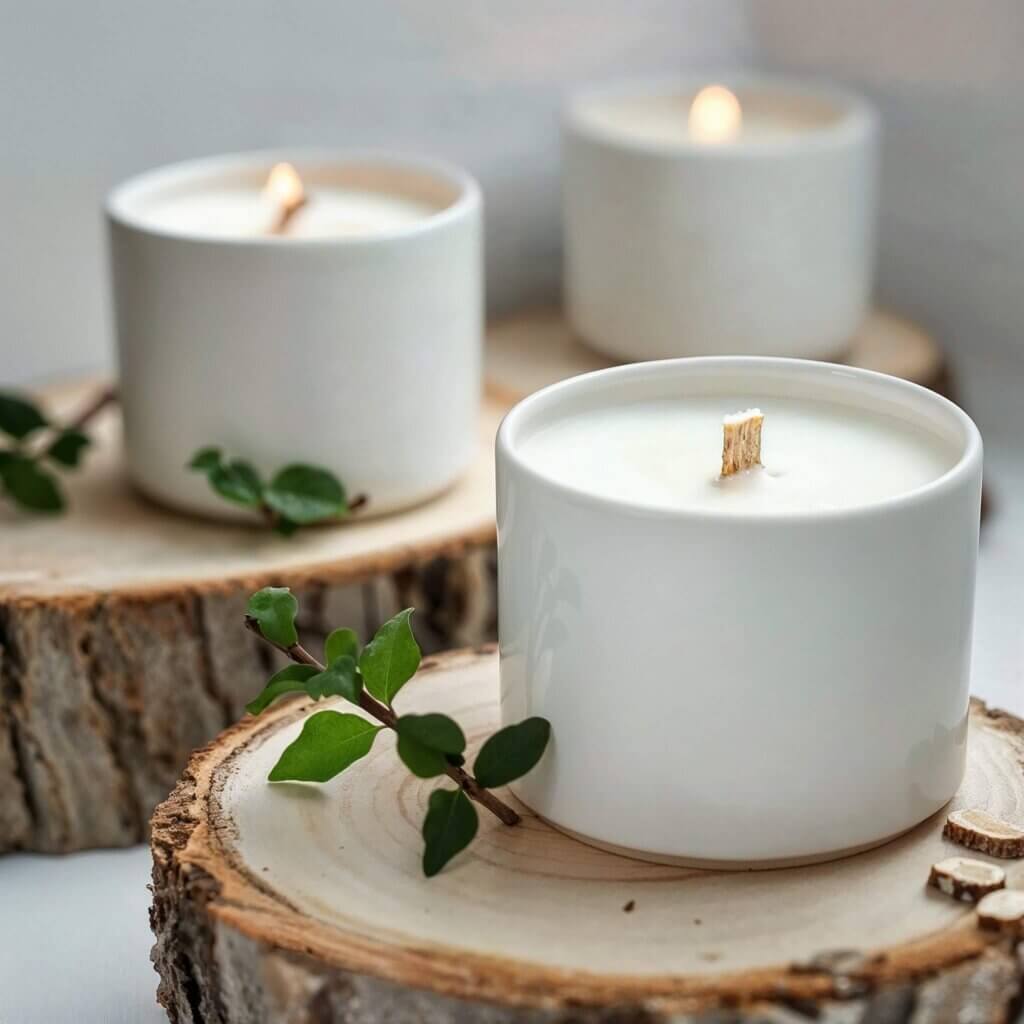
Wood wicks are made from natural wood, often from trees like cherry or birch. They come in different sizes and shapes, such as flat, round, or cross-shaped. The type of wood and the shape of the wick can affect how the candle burns and how it looks.
Advantages of Wood Wicks
- Unique Crackling Sound: One of the coolest things about wood wicks is the crackling sound they make when they burn. It sounds like a mini fireplace, which can make your candle experience even more cozy and relaxing.
- Aesthetically Pleasing: Wood wicks look beautiful in candles. They add a rustic and stylish touch that can make your candles stand out.
- Better Scent Throw Due to Wider Surface Area: Wood wicks have a larger surface area than cotton wicks, which helps spread the candle’s scent more effectively. This means your room will smell wonderful faster.
- Slower Burn Time: Candles with wood wicks usually burn slower than those with cotton wicks. This means your candle will last longer, giving you more value for your money.
Disadvantages of Wood Wicks
- More Expensive Than Cotton Wicks: Wood wicks tend to cost more than cotton wicks. If you’re making a lot of candles or are on a tight budget, this might be something to consider.
- Can Be More Challenging to Light Initially: Lighting a wood wick can be a bit tricky at first. They sometimes take a little longer to catch fire compared to cotton wicks.
- Requires Appropriate Container Size for Optimal Performance: To get the best burn from a wood wick, you need to use the right size container. If the container is too small, the wick won’t burn properly, and if it’s too large, the wick might not be able to heat the wax evenly.
Factors to Consider When Choosing Wood Wick vs Cotton Wick
- Type of Wax Used: Different waxes burn differently. Some work better with cotton wicks, while others are better with wood wicks. Make sure to choose a wick that matches the type of wax you’re using.
- Candle Container Size and Shape: The size and shape of your candle container can influence how well your wick burns. Wood wicks need more space, so they might not be the best choice for very small containers.
- Desired Scent Throw: If you want a strong scent, wood wicks are often the better option because they can spread the fragrance more effectively.
- Personal Preferences (e.g., Sound, Appearance): Think about what you like in a candle. If you love the sound of a crackling fire and a rustic look, wood wicks are a great choice. If you prefer a simpler, more traditional candle, cotton wicks might be better for you.
Maintenance and Care
Wick Cotton
Trimming Tips: Keeping your cotton wick trimmed is essential for a clean and even burn. Before lighting your candle, make sure the wick is about 1/4 inch long. This helps prevent the flame from getting too big and producing smoke. Use a pair of scissors or a wick trimmer for the best results.
- Troubleshooting Common Issues: If your candle is tunneling (burning down the middle and leaving wax around the edges), it might be because the wick is too small for the candle size. Try using a larger wick next time. If the flame is too small and keeps going out, the wick might be drowning in the melted wax. Make sure to trim the wick and let the candle burn long enough to melt the wax all the way to the edges.
Wooden Wicks
- Ensuring Proper Alignment: For the best performance, make sure your wood wick is centered in the candle. An off-center wick can cause uneven burning and may lead to one side of the candle burning faster than the other. Take your time to position the wick correctly when you’re making your candle.
- Troubleshooting Common Issues: If your wood wick isn’t lighting properly, try trimming it down to about 1/8 inch. Sometimes, the wick can be too long, making it hard to catch fire. If the wick keeps going out, it might be because the candle isn’t burning long enough to melt the wax evenly. Let the candle burn for at least an hour during the first use to create a full melt pool.
Cotton wicks are affordable, easy to find, and provide a consistent flame, but they need frequent trimming and can cause tunneling. Wood wicks offer a unique crackling sound, a stylish look, better scent throw, and a slower burn time, but they are more expensive and harder to light.
Every candle maker has different preferences and needs. The best way to find out what works for you is to experiment with both cotton and wood wicks. Try making candles with each type to see which one you prefer.
Don’t be afraid to try something new. Both cotton and wood wicks have their own unique benefits and challenges. By testing both types, you’ll be able to create the perfect candles for your home or business.
ALSO READ >> Fix Candle Tunneling: 5 Effective Methods to Restore Your Candles